
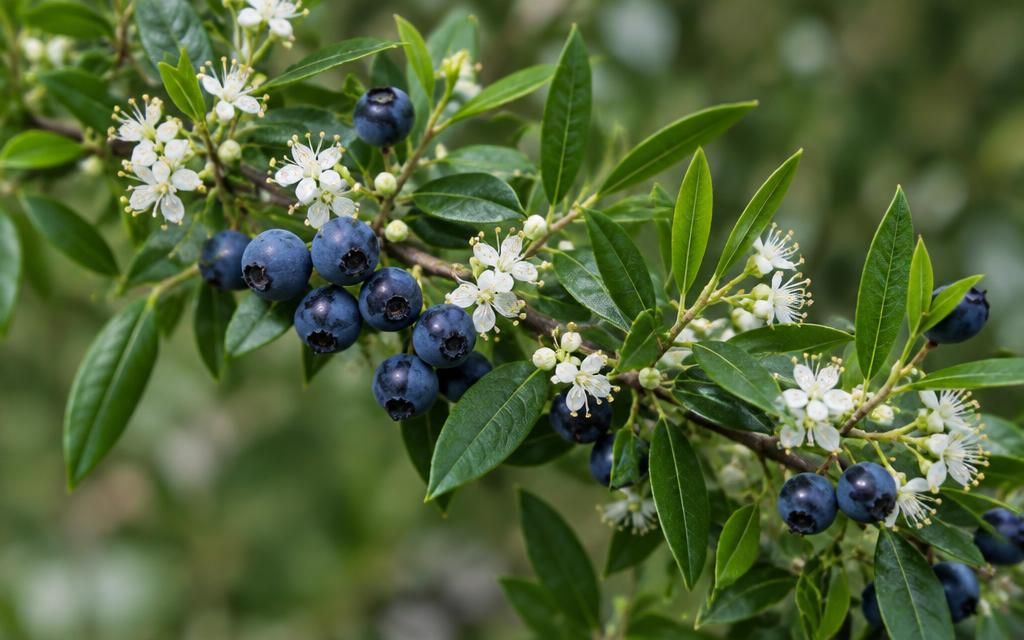
Plants of goddesses and poets, myrtle and laurel carry some of the oldest symbolism of the Mediterranean.
In ancient Greece, the myrtle was the plant of Aphrodite. Myths tell that the goddess hid behind a myrtle bush when she came ashore, and myrtle wreaths were worn at weddings and festivals.
Laurel, sacred to Apollo, crowned poets and victors. The Latin word laurea gave us ‘laureate’, and the image of the laurel wreath still signifies honour and achievement.
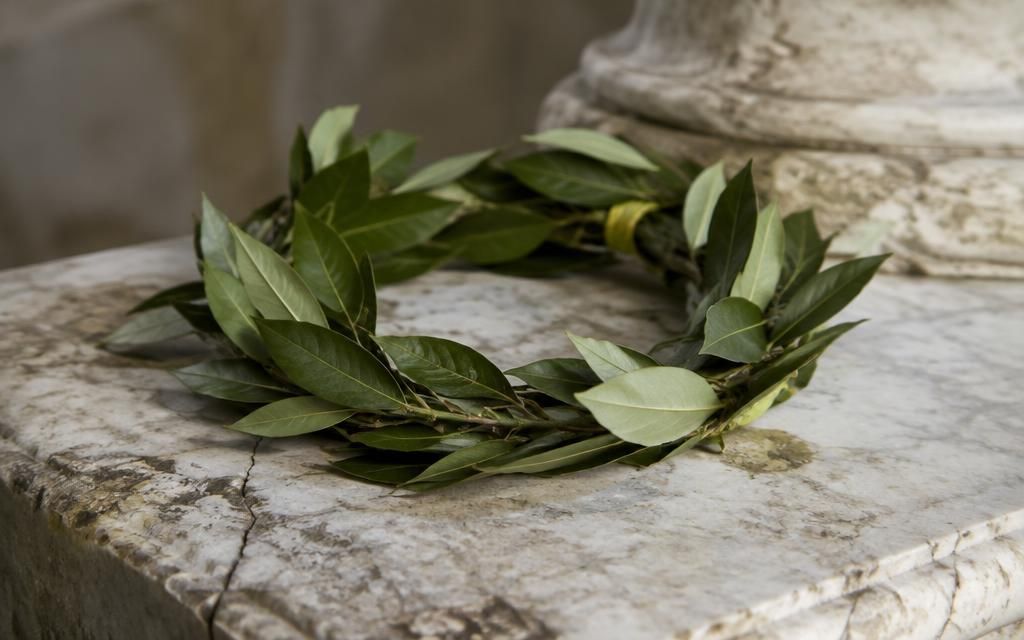
Both plants are evergreen. Their leaves stay green through the dry Mediterranean summer, which made them natural symbols of continuity and enduring life.
In the Cypriot countryside, myrtle grows near streams and in shaded valleys, while laurel is found in gardens and sacred places. Both have been used in local cooking and traditional preparations.
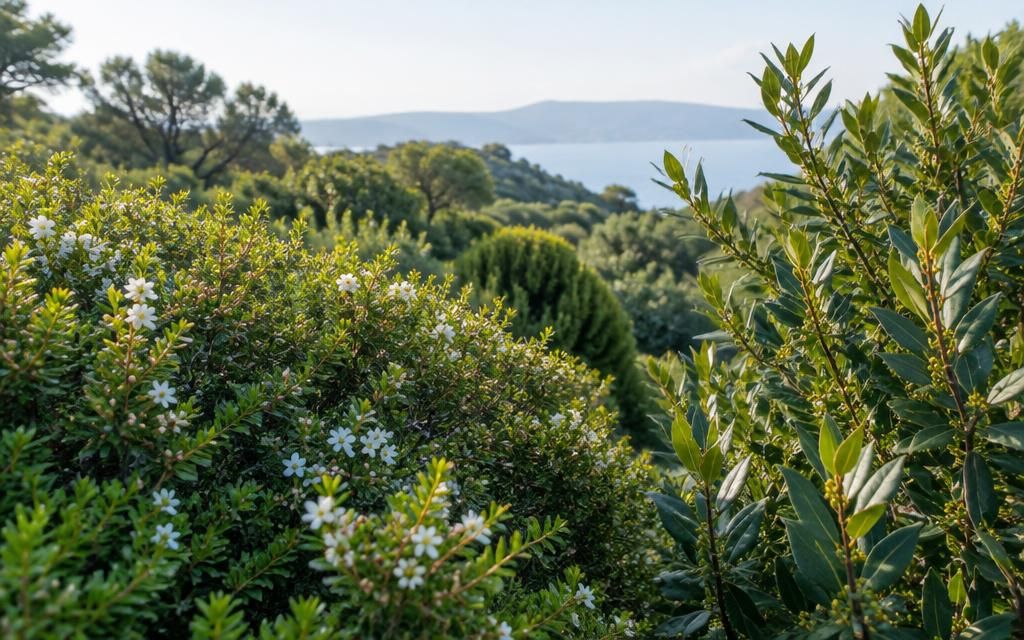
These associations are mythological and cultural. They inspire ZeinAn’s storytelling about beauty and endurance, without implying any specific effect of the plants themselves.
To choose the evergreen as a symbol is to choose patience. Like a myrtle in summer, a heritage endures by quietly holding on to what it knows.
Editorial heritage essay by ZeinAn, within the cultural remit of the Longevity Academic Committee. Mythology and tradition are presented as such; this text makes no product or health claims.
Next essayLefkara lace: patience woven by hand →