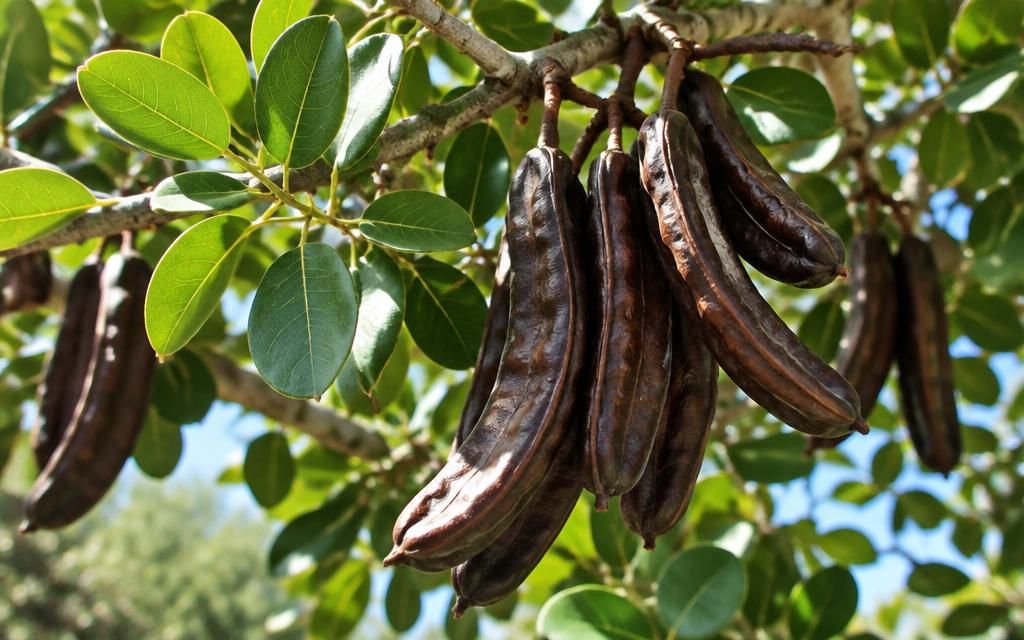
Once one of the island’s most valuable exports, the carob tree tells a story of resilience in a dry land.
The carob tree thrives where little else does: on dry, stony hillsides, with deep roots and evergreen leaves. In Cyprus it was so valuable that its pods were known as ‘black gold’.
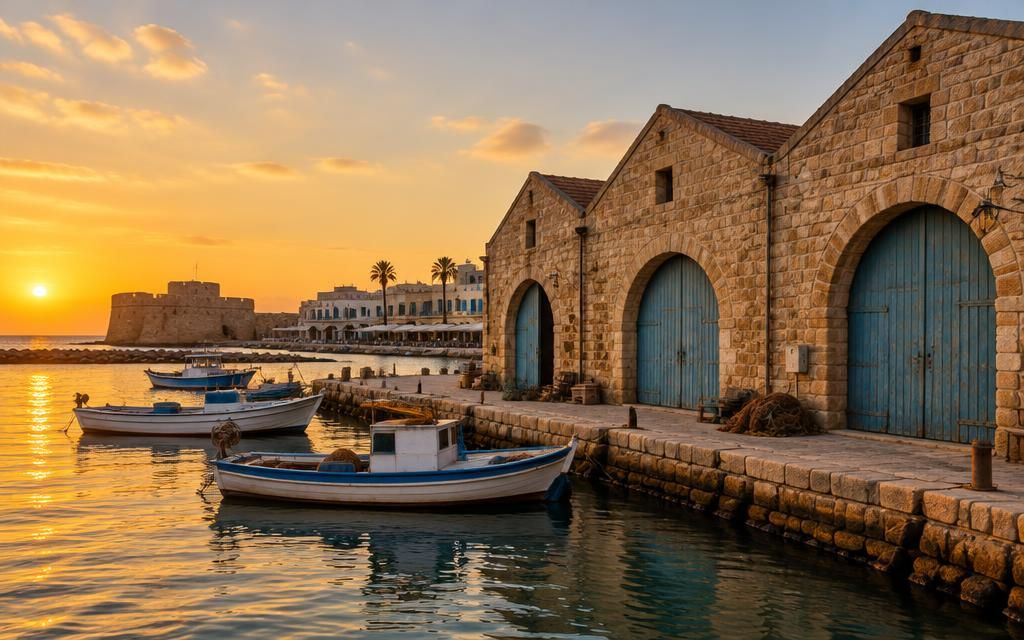
For centuries carob was exported from Cypriot ports. Old stone warehouses along the coast, built to store the pods before shipping, are still visible today in several coastal towns.
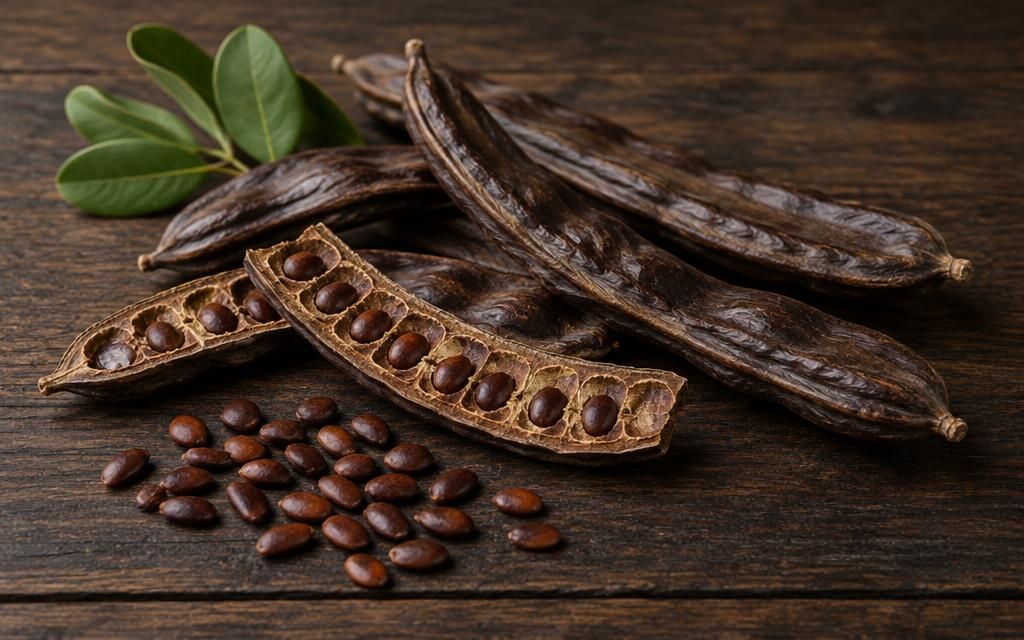
Carob seeds are remarkably uniform in weight, and a widely told tradition links them to the ‘carat’, the unit used to weigh gold and gemstones. Historians discuss the details, but the story shows how precious the tree once was.
Carob pods were used to make a thick syrup, still a traditional Cypriot product, and sweets prepared for festivals and family gatherings. Nothing was wasted: pods, seeds and wood all had uses.
The carob is a symbol of resilience: a tree that endures heat and drought and keeps giving. That quality speaks to our idea of sustainable longevity — thriving with restraint.
Should carob-derived ingredients ever appear in a ZeinAn formula, they will be described precisely and supported by testing. Here, we celebrate the tree as heritage.
Editorial heritage essay by ZeinAn, within the cultural remit of the Longevity Academic Committee. Mythology and tradition are presented as such; this text makes no product or health claims.
Next essayThyme, sage and oregano: the herbs of the hillsides →